Bare-die RF test hardware for JPL’s atmospheric water-sensing missions


JPL conducts advanced research in planetary science, Earth-observing technology, and astronomy.
Client
JPL
Industry
Space
What client brought
Design
Service provided
Custom Solution
NASA’s Jet Propulsion Laboratory is a federally-funded research and development center, managed by Caltech. Responsible for developing new technologies to further explore the universe, JPL has been at the forefront of climate change research. JPL / NASA is flying the Airborne Scanning Microwave Limb Sounder (A-SMLS) aboard the ER-2 high altitude aircraft to measure naturally-occurring microwave thermal emission from the limb of Earth to remotely sense and analyze atmospheric gasses. Once the aircraft reaches 70,000 feet, the A-SMLS analyzes water vapor, ozone, and other trace stratospheric gasses using a custom designed remote sensing spectrometer microchip that captures spectral data, processes and identifies the chemical markers inside.
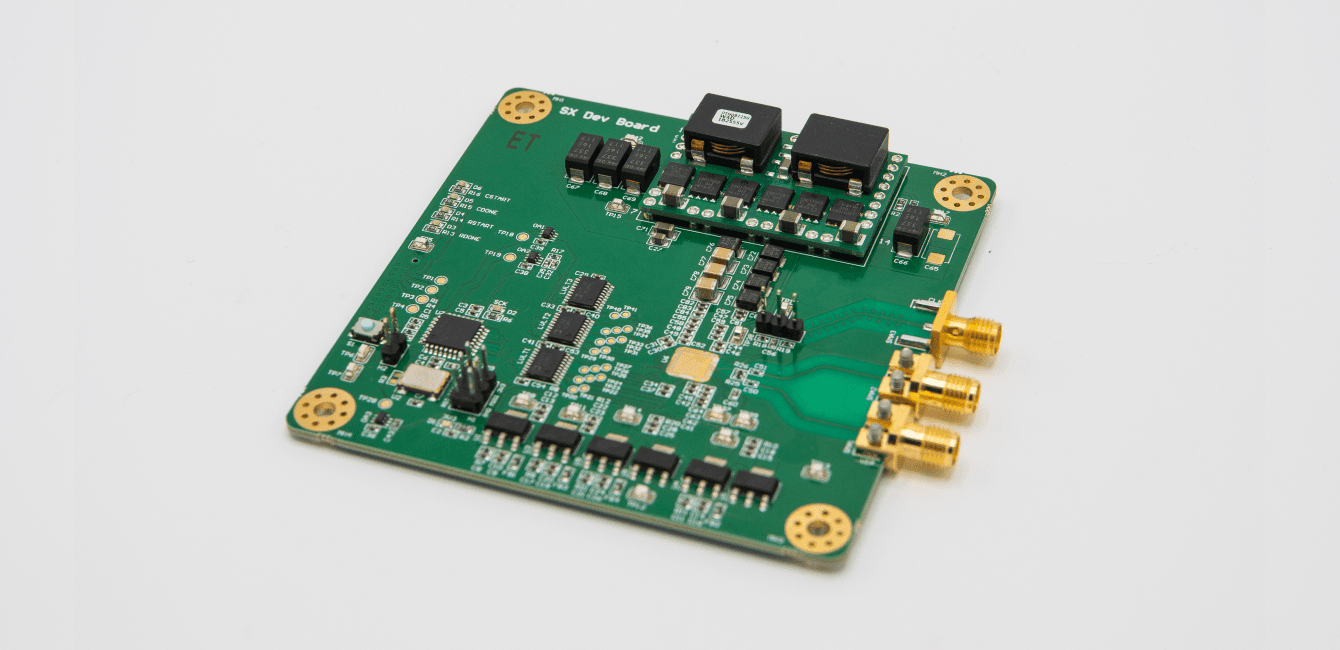
Normally, chips are encased in a plastic enclosure to protect them. The enclosure does however cause a small parasitic loss in efficiency. Due to the high-efficiency requirements of this mission, Second Order Effects (SOE) has a long history of working on aerospace projects that require high-effiency bare die bonding, and began working on JPL on this project.In less than two months, SOE designed a test board with custom footprint, rearranging the pins and adding a regulator to reduce the amount of coupling that occurred between board components.
Once proven on ASMLS, NASA is planning to deploy their SX microchip on additional missions, including sub-orbital flights, satellites, and beyond.