Engine control systems for an oxidizer-rich staged combustion rocket engine

Ursa Major delivers mission-ready propulsion across missile defense, hypersonics, in-space mobility, and launch
Client
Ursa Major
Industry
Space
What client brought
Specifications
Service provided
Custom Solution
Background
Since the early 2000s, the United States has depended on Russian and Ukrainian-made rocket engines. However, due to increasing political tensions, developing American propulsion systems has become critical.
Our client, Ursa Major, is meeting this need. Ursa Major is an independent rocket propulsion provider enabling more rapid, affordable, and reliable access to space.
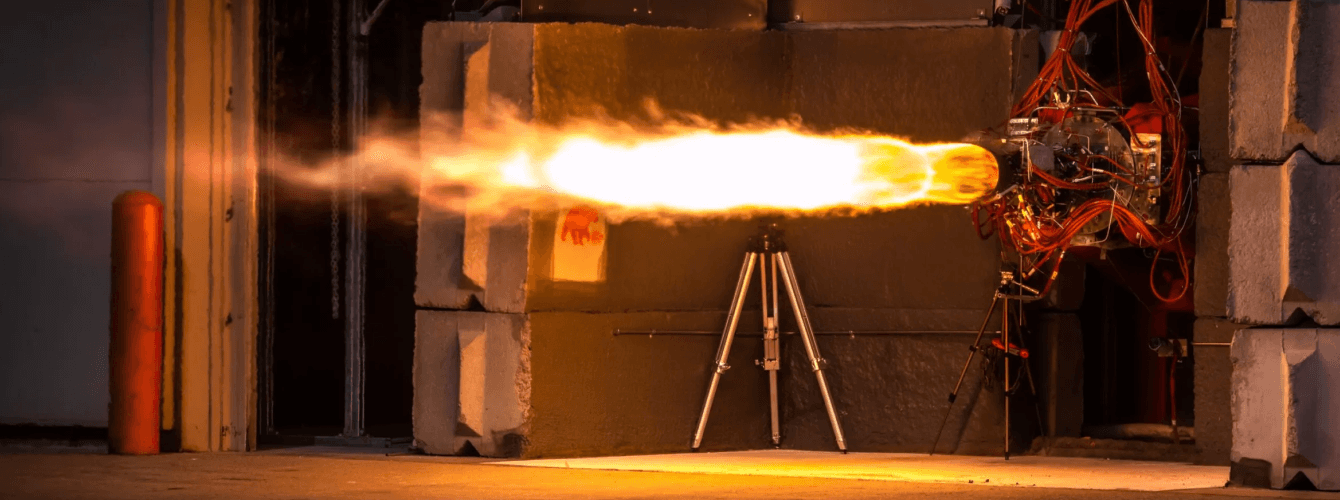
Ursa Major’s Hadley engine hotfire test (Credit: Ursa Major)
Hadley Block 1 engine controller
When Ursa Major was a 10-person startup, they had no electrical engineers on staff. They approached Second Order Effects (SOE) to fill this gap and develop a controller for Block 1 of their Hadley engine.
Hadley is the first American-made, oxygen-rich staged combustion engine. With a thrust of 5,000 LBF (22,000 N) fueled by liquid oxygen and kerosene, Hadley is also the first engine ever qualified for both hypersonics and space launch.
The controller needed to be lightweight, reliable, space-worthy, and efficient without the high costs of traditional space-rated avionics.
We designed a real-time embedded control system with over 35 I/O for engine telemetry and management, including temperature sensors, pressure sensors, Brushless Direct Current (BLDC) motor drivers, valve drivers, speed sensors, and servo valve drivers, all housed in an 8-inch x 3.5-inch box. Our controller efficiently manages throttle, propellant usage, and thrust vectoring while monitoring the engine’s health and status in real time.
Our team explored and presented three production options: using traditional space-rated parts, automotive parts, or a combination of both. We selected the automotive part approach to balance cost, testing requirements, reliability, and flexibility. This choice allowed us to optimize for end-client needs and stay aligned with Ursa Major’s approach to design.
We delivered production-level controllers at the end of June 2017, enabling Hadley to hotfire on the first try.
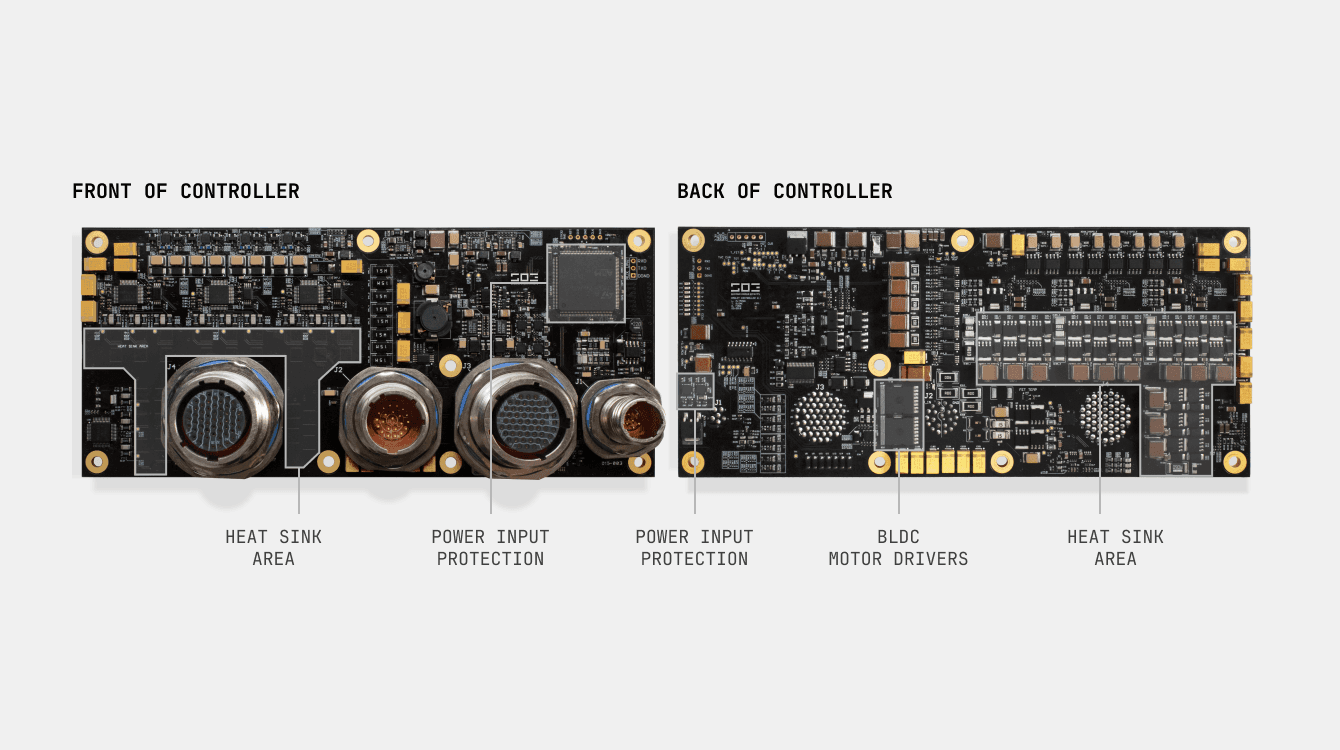
Front and back of Hadley Block 1 engine controller
Hadley Block 2 engine controller
Following successful work on Hadley Block 1, we continued our partnership to develop an updated engine controller for Hadley Block 2.
The new controller includes significant additions and improvements to the Block 1 design, including adjustments to channel counts and interfaces, the integration of circuitry advances from another Ursa Major engine into the Hadley design, and the development of a new temperature sensor.
Our cryogenic temperature sensor accurately and precisely reads across eight Type-E thermocouple channels to meet Ursa Major’s end-client requirements for LOX-density measurements and real-time specific impulse calculations. The sensor reads across a
-364℉ to 32℉ range within ±1.0℉. For comparison, medical thermometers also measure within ±1.0℉ precision, but across less 20℉, and a home oven will measure across 300 ℉, but with ±25℉ precision.
The effort required to achieve this high precision and accuracy is worthwhile because it allows Ursa Major to provide end clients with reliable data on Hadley’s specific impulse, or thrust efficiency. Clients value this data because they use it to predict how much the engine can carry to orbit and want to have high confidence in the calculations.
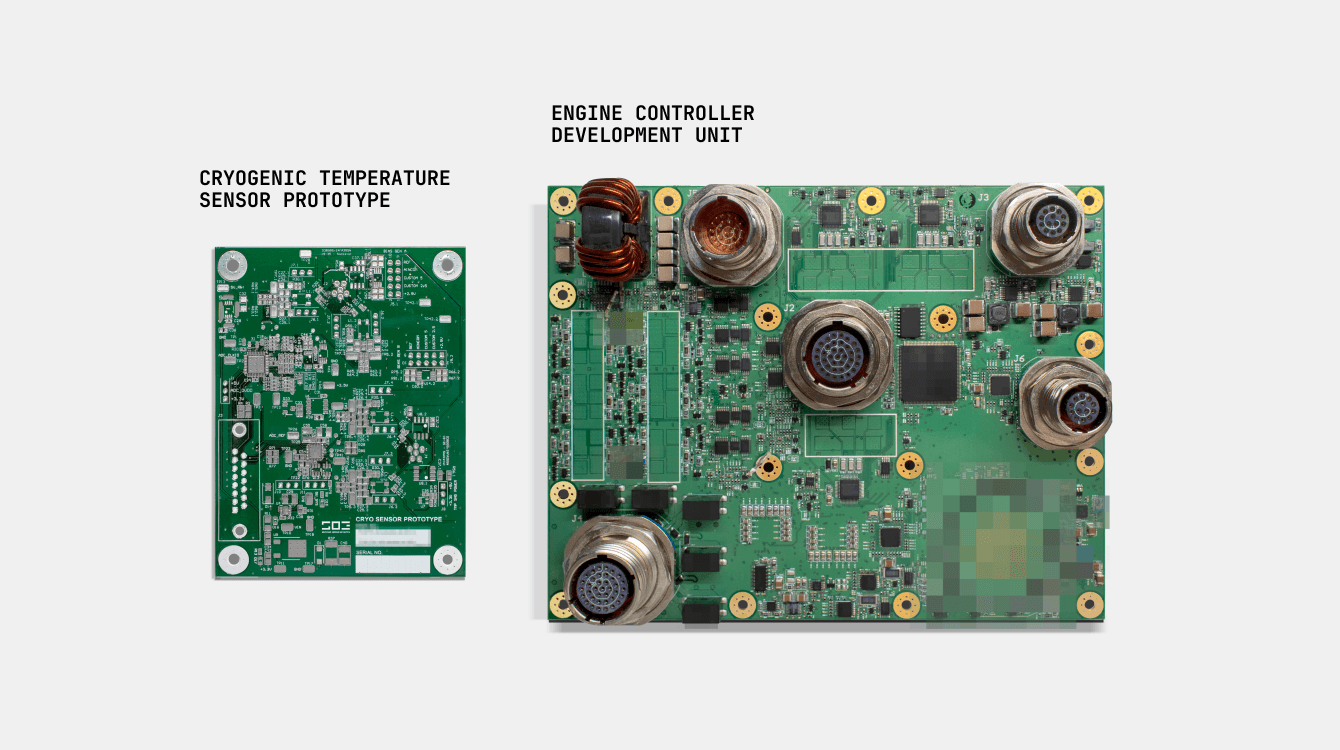
Cryogenic temperature sensor prototype and Hadley Block 2 engine controller development unit. Certain areas have been blurred to maintain confidentiality.
Results
On March 9, 2024, Hadley powered Stratolaunch’s Talon-A1 (TA-1) testbed over the Pacific Ocean. This test made Hadley the first American oxygen-rich combustion engine to fire and fly – a milestone previously only achieved by Russian engines.
Since 2016, we’ve supported Ursa Major’s growth from a 10-person startup to a pivotal player in American propulsion system development. We look forward to continuing to partner with them when needed to enable more rapid, affordable, and reliable access to space, all within the US.