Prototype development of a micro-electrokinetic cell separation platform

Triton Bio develops bioinstruments to accelerate lab workflows, with applications in research and diagnostics.
Client
Triton Bio
Industry
Medical
What client brought
Idea
Service provided
Advisory Services
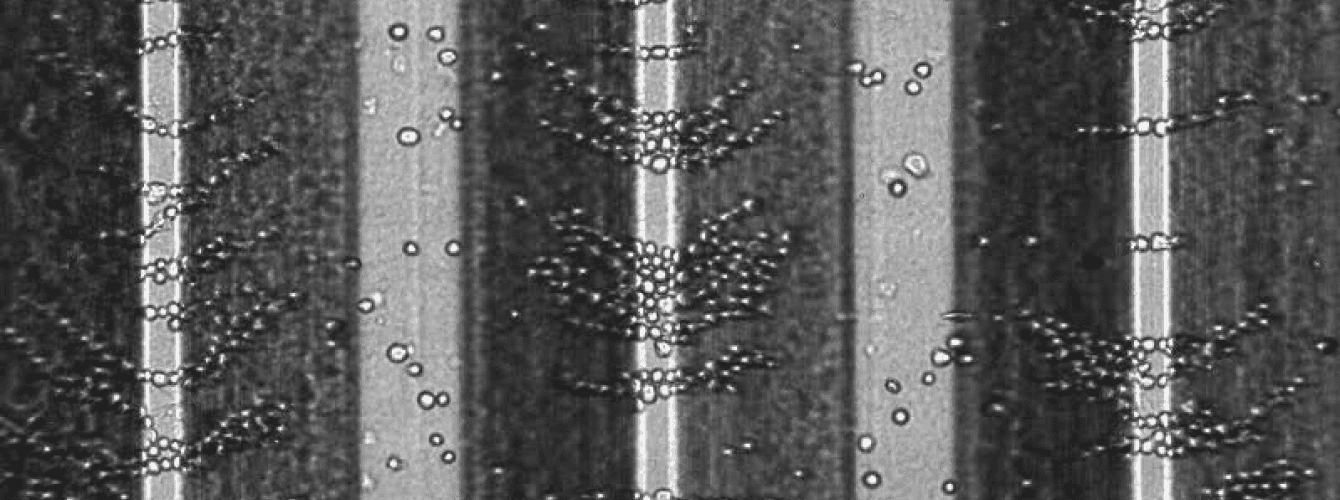
Triton Bio develops tools for biochemical engineers. Their product, ElectroFlow, curtails the time it takes to sort cells, accelerating technological developments in fields like medicine, agriculture, energy, and material sciences. ElectroFlow’s diagnostic technology uses Dielectrophoresis (DEP), which sorts cells by their motion through a non-uniform electric field, processing fluids at a higher volumetric flow rate than the current products on the market. The electric field polarizes the cell, which in turn experiences a dipole-dependent force that can be used to sort by size and shape. This allows cells and particles to be separated in a non-destructive manner.
Second Order Effects (SOE) partnered with Triton Bio to develop a parameterized model of their DEP electrode, to aid in more accurate simulations of their driver electronics. Then, SOE proposed an amplifier and matching network architecture that supported large bandwidths for the excitation signal, which in turn permits sorting by cellular structures of different size and shape. While other micro-electrokinetic separators on the market are limited to processing low volumes (tens of microliters per hour), ElectroFlow can process up to 10 milliliters per hour, which thereby increases cell sorting for biochemical engineers by an order of 1000.
Triton Bio is supported by the National Science Foundation, National Institute of Health, and DARPA.