Avionics development for a microgravity manufacturing spacecraft


Varda is a commercial space manufacturing company dedicated to building infrastructure for in-orbit production and material recovery.
Client
Varda Space Industries
Industry
Space
What client brought
Specifications
Service provided
Prototyping
Background
In the absence of Earth’s gravity, typical manufacturing constraints don’t apply. Forces dependent on gravity, like convection currents, sedimentation, and buoyancy, impact pharmaceutical manufacturing specifically. Without these disruptions in production, the fine particles used in pharmaceuticals mix and settle more evenly. This increases uniformity in the size and structure of the resulting drug crystals, which are then used to create more reliably performing pharmaceuticals.
While environments with low gravity can be recreated on Earth, gravity can only be circumvented for short periods before it is reintroduced. This makes it nearly impossible to utilize low-gravity for the longer periods required for manufacturing.
Varda Space Industries identified an opportunity to utilize the benefits of microgravity in space to advance life on Earth. In 2021, they started developing a spacecraft to handle autonomous pharmaceutical manufacturing and return from space, which is almost as complex as the manufacturing.
Payload Module and Re-Entry Capsule Controller
Varda came to Second Order Effects (SOE) with a top-level understanding of the mission and interfaces required. With their target mission date set, Varda focused their in-house efforts on other elements of the spacecraft’s construction and sought out SOE’s support on the avionics controller.
SOE helped Varda identify hardware and software solutions for the payload module and re-entry capsule controller, then worked with Varda to design, build, test, program and qualify it.
Once the spacecraft makes it to low Earth orbit, the controller powers, monitors, and commands the equipment for the payload process of manufacturing pharmaceuticals. Then, the re-entry capsule separates from the satellite bus to transport manufactured goods back to Earth. On the re-entry capsule, the controller provides power management, load channels, and the logic required for the separation. It is also built to handle trickle charging of batteries and parachute deployment for landing.
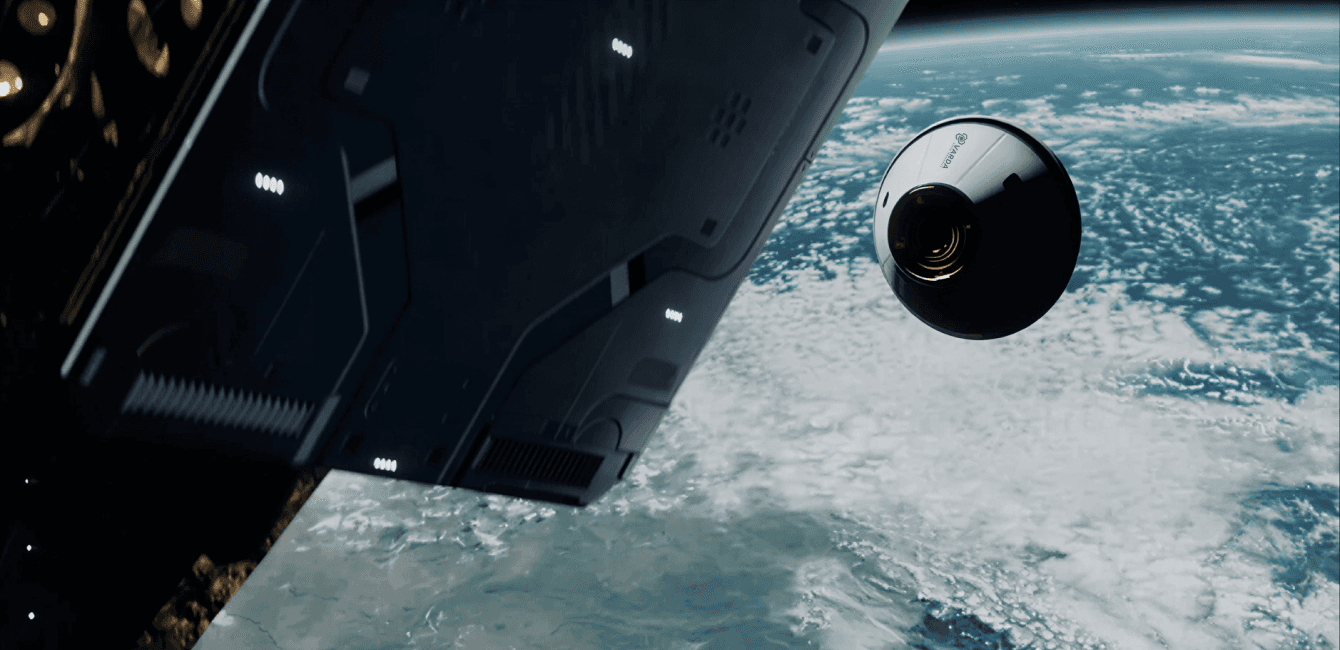
3D rendering of Varda’s re-entry capsule separating from satellite (Credit: Varda Space Industries)
SOE delivered the first engineering unit to Varda in just five months. Throughout the development of this flight computer, Varda’s re-entry capsule and payload module were under development in parallel. SOE worked quickly through additional analysis, testing, and circuit design changes as the functionality and location of the controller changed with the developing architecture.
Instead of space-rated or Mil-spec parts, SOE used a careful commercial off-the-shelf (COTS) method for selecting electronic piece parts. This method balanced cost and schedule with reliability, which was crucial to this mission. If a single event upset caused an unplanned separation, it could send pieces of the spacecraft plummeting back to Earth. To prevent this and increase reliability, the design used an independent dual string system for fault tolerance.
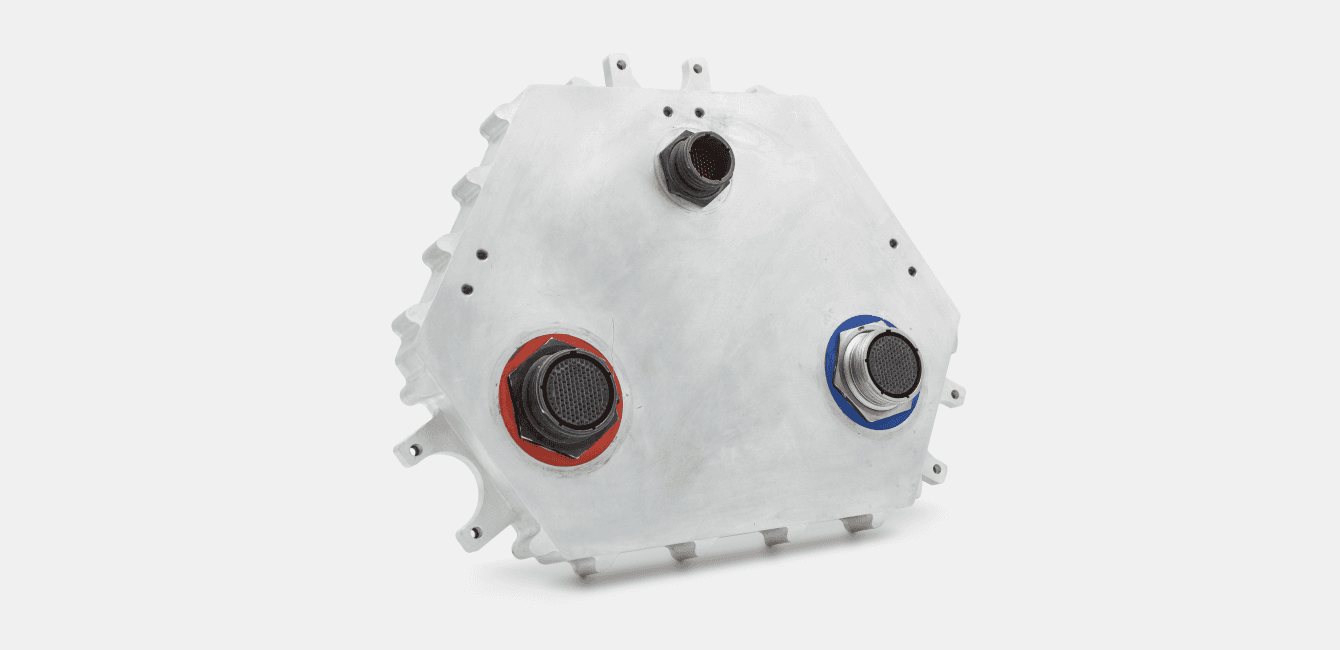
SOE’s Payload Module and Re-entry Capsule Controller
Due to the aggressive timeline, the flight computer underwent a proto-qualification campaign for testing. SOE built an automated test rack to evaluate the controller’s functionalities against the environment it would encounter on its journey to space and in low Earth orbit. The flight computer was put through shock, vibe, thermal cycling, thermal vacuum, electromagnetic compatibility testing, and additional testing for Varda.
In order to improve reliability of the re-entry sequence, SOE separated the deploy sequences from the space operations and manufacturing code. This ensured there was no interference and the deploy sequences alone could undergo the necessary testing. SOE completed Independent Verification & Validation (IV & V) on the embedded Field-Programmable Gate Array holding the deploy sequences. Once all of these tests were complete, the flight computer could be delivered to the client ready to fly.
Shock testing the controller in SOE’s lab and test space
Results
SOE developed and delivered engineering units and multiple avionics controllers prepared for flight in less than one year. These controllers enabled Varda to complete a flight with a rideshare mission in June 2023. They successfully re-entered in February 2024 with crystals of Ritonavir – a protease inhibitor drug used to treat HIV – manufactured in space.
This mission marked the first time orbital drug processing has occurred outside of a government space station. It also makes Varda the third company ever to recover an intact spacecraft from orbit.
As of March 2025, Varda has successfully completed an additional mission, outfitted with another SOE flight computer. SOE looks forward to supporting Varda as they continue to pursue their mission of “expanding the economic bounds of humankind.”